

Meet your SEDI mandate, with a partner who is already building it.
Utah SB 260/275 mandates credential-based digital identity for all state agencies and healthcare organizations receiving over $10 million in government funding. Veridian provides the technology, the compliance roadmap, and the implementation support.
All new systems must support credential-based state identity from day one. Organizations that have not started planning are already behind.
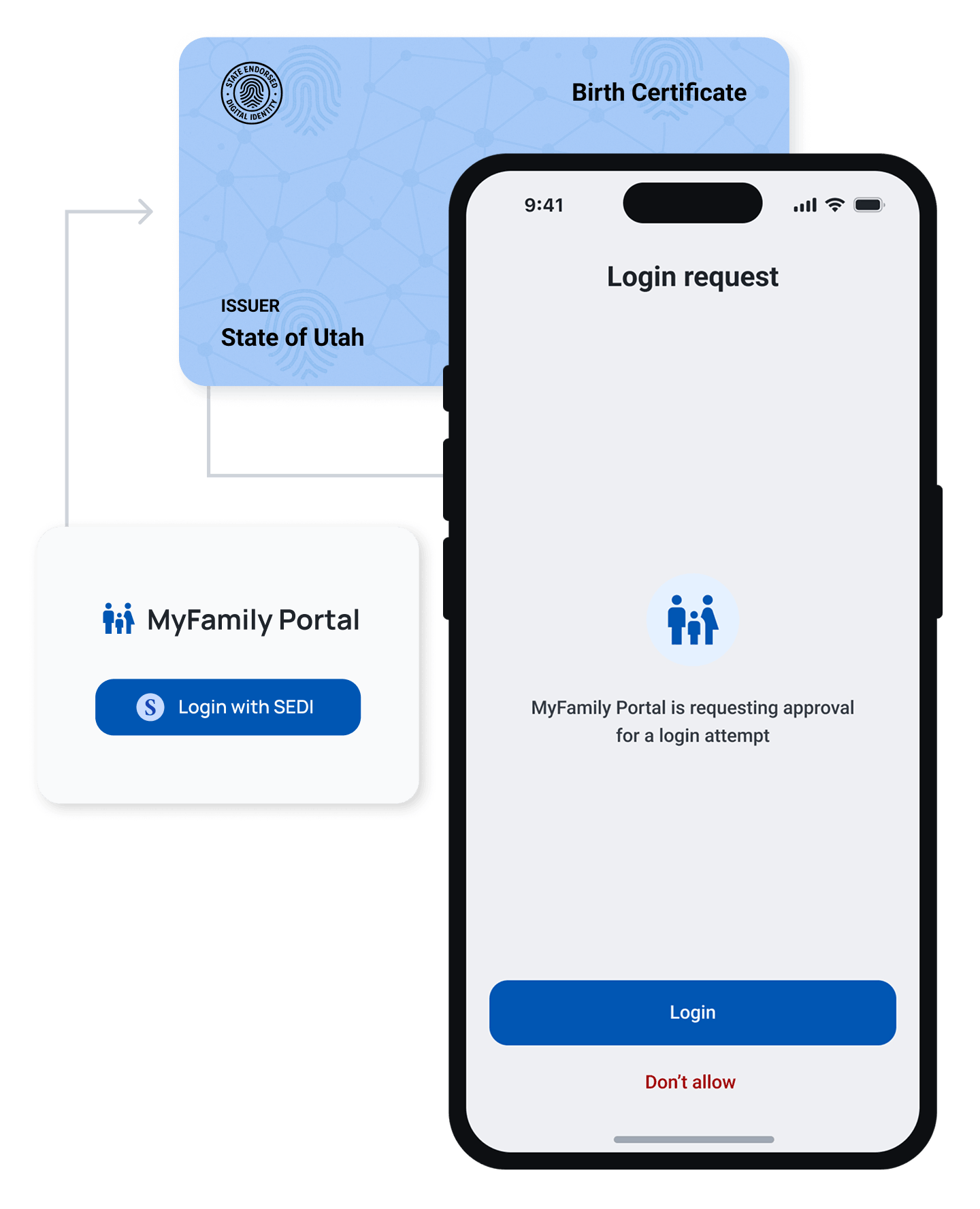
Utah changed the rules. Two laws. One new standard for digital identity.
SB 260
Individual Digital Identity Amendments (2025)
Utah's landmark 2025 law established the foundational framework for SEDI. It mandates that digital identity must be inherent to the individual (endorsed, not bestowed, by the state), fully optional (physical ID remains a guaranteed right), privacy-preserving (no surveillance, tracking, or profiling), selective in disclosure (individuals control what they share), and built on open, interoperable, non-proprietary technology.
SB 275
State-Endorsed Digital Identity Program Amendments (2026)
Passed unanimously (25-0 Senate, unanimous House) on March 4, 2026. Effective May 6, 2026. SB 275 creates the operational SEDI Program with a codified Digital Identity Bill of Rights, a mandate for device-based credentials stored in mobile wallets, a requirement for government agencies to accept SEDI credentials, and an active RFI (AE26-1) from Utah's Division of Technology Services.
Utah's approach is recognized as the strongest privacy framework for government digital ID in the US and serves as a template for other states.
Utah's privacy mandates effectively wrote the spec for KERI and ACDC.
SB 260 and SB 275 do not mandate any specific technology, but their requirements close the door on centralized identity databases and server-dependent systems, and open it specifically for self-sovereign, non-correlatable infrastructure. That is precisely what KERI and ACDC deliver.
SEDI Requires
KERI/ACDC Delivers
Identity inherent to the individual, not state-bestowed
Autonomic Identifiers (AIDs) are self-certifying and self-sovereign, no central authority required
Selective disclosure of attributes
ACDC credentials support graduated disclosure and chain-link confidentiality
No surveillance, tracking, or profiling
Pairwise AIDs are non-correlatable across contexts
Device-based credentials in mobile wallets
KERIA agents support device-resident key management, wallet integration via SignifyTS
Open and interoperable technology
KERI, ACDC, and CESR are all Trust Over IP (Linux Foundation) standards, fully open source
Cryptographic security and verifiability
KERI pre-rotation provides post-quantum key rotation, ACDC provides cryptographic provenance chaining
One integrated tech stack.
Real-Time Credential Verification
A cloud-hosted or on-premises API that verifies KERI-based ACDC credentials in real time. Government agencies and businesses call this API to confirm that a citizen's or entity's digital identity credential is valid, unrevoked, and meets policy requirements.
Who it's for?
State agencies, financial institutions, healthcare providers, and any organization that needs to verify SEDI credentials.
Features
Real-time ACDC credential verification against the KERI witness network
Configurable policy rules for selective disclosure requirements
Full audit logging for government compliance and transparency mandates
On-premises deployment option for state infrastructure security requirements
FedRAMP/StateRAMP alignment pathway for cloud deployment
Mobile Wallet Infrastructure
Native iOS, Android, and GrapheneOS identity wallets that store KERI-based ACDC credentials securely on-device. Citizens hold their own credentials without relying on a central server or identity provider.
Who it's for?
State agencies issuing SEDI credentials, healthcare organizations, and municipalities deploying citizen identity programs.
Features
iOS, Android, and GrapheneOS native wallet applications
On-device key storage with hardware security module support
Selective disclosure of credential attributes using ACDC
Offline-capable credential presentation and verification
Full SEDI compliance out of the box for Utah state programs
End-to-End Identity Lifecycle
Infrastructure for issuing, renewing, suspending, and revoking SEDI credentials at scale. Integrates with existing state identity systems and provides a managed operations layer for government agencies.
Who it's for?
Utah state agencies, healthcare organizations, and any entity responsible for issuing or managing SEDI credentials at scale.
Features
Credential issuance workflow integrated with existing state identity systems
Automated renewal and expiry management for credential lifecycle
Immediate revocation propagation across the KERI witness network
Delegated administration for multi-agency deployments
Compliance reporting dashboard for regulatory audit requirements
Two markets. One infrastructure. A growing national opportunity.
Built for state procurement. Ready for Utah's mandate.
Utah's SEDI program is in active procurement. The state has issued RFI AE26-1 through the Division of Technology Services. Veridian is positioned across three sequential windows: RFI response, competitive RFP, and deployment.
Differentiators
- – Full-stack capability: verification, wallets, and onboarding as a single integrated service; no multi-vendor assembly required
- – GLEIF ecosystem bridge: citizen identity (SEDI) and business identity (vLEI) operating on the same KERI/ACDC infrastructure
- – Production-grade: identity infrastructure already running in real deployments, not a roadmap
Once citizens hold SEDI credentials, every business serving them needs the tools to verify them.
The SEDI program creates a demand-side B2B market. Government creates the credential ecosystem, and the private sector builds the verification ecosystem. Veridian sits at the center of both.
Target segments
- – Financial services: KYC/AML, account opening, loan origination
- – Healthcare: patient identity, insurance verification, prescription authorisation
- – Higher education: student identity and academic credential verification
- – HR tech and HR tech: employee identity, right-to-work, background checks
- – Age-restricted services: age verification without revealing full identity
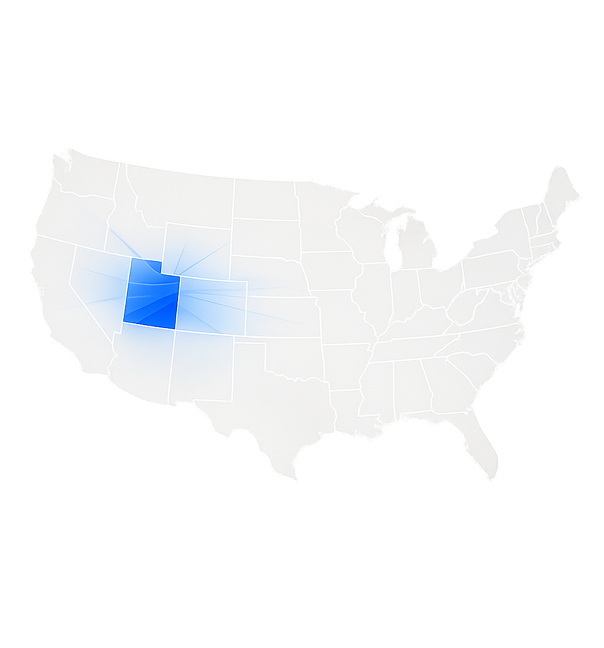
Utah is the template. The rest of the country is watching.
Utah's SEDI legislation is widely recognized as a national model. As other states adopt similar frameworks, the demand for KERI/ACDC-compliant technology providers will scale nationally. First-mover positioning in Utah creates a defensible reference case for every state that follows.
24 months
For Utah state agencies and qualifying healthcare organizations to achieve full SEDI compliance under SB 275
$4.1B
Projected US decentralized identity market by 2031, growing at 20% CAGR
60%+
Of enterprises globally will use verifiable credentials as a core identity function by 2026 — Gartner
Start where you are. Move at the pace you need.
Compliance assessment and roadmap
A standalone engagement with no ongoing commitment required. Ideal for organizations that need to demonstrate a compliance plan to leadership or a procurement committee.
What's included
- • Full system audit against SB 260/275 requirements
- • Gap analysis with severity and urgency ratings
- • Prioritized implementation roadmap
- • Written report delivered at the end of the engagement
Full implementation partner
Veridian acts as your end-to-end SEDI implementation partner. Phased delivery aligned to your compliance milestones and budget cycles.
What's included
- • Compliance assessment and roadmap
- • Infrastructure deployment and configuration
- • Mobile wallet setup for citizens or employees
- • Managed operations and SLA-backed hosting
Technology vendor enablement
For technology companies building SEDI-compliant products for government clients. Veridian licenses its infrastructure via resellers so vendors can offer SEDI compliance as a feature without building the identity stack from scratch.
What's included
- • Access to Veridian's KERI/ACDC infrastructure via licensing
- • Integration support and technical onboarding
- • Co-marketing and go-to-market collaboration
Your 24-month timeline is underway. Let's map your path to compliance.
Whether you need a rapid assessment before a tender deadline or a full implementation partner for the long term, one conversation with Veridian will give you a clear picture of where you stand and what needs to happen next.
Request a SEDI Assessment arrow_forwardNo obligation · Fixed-scope assessment available · We respond within one business day